Showing posts with label holidays. Show all posts

Tuesday, June 24, 2014

Litha

Litha... or Summer Solstice... or Midsummer, depending one what you want to call it, is a celebration on the longest day of the year. Summer Solstice is one of the 4 minor sabbats and is a solar holiday, a day we celebrate the sun.

On this day in Celtic mythology, the eternal battle between the Oak King and the Holly King changes tide and the Holly King begins to grow in power as the Oak King loses the battle (until Winter Solstice comes around again). Alternatively, this is also a day that the we mourn the Sun King as he is dying, to be reborn again at Yule.

In many religions and cultures, bonfires are lit on this day to ward away evil spirits and bring luck and blessings for a good harvest. Themes for the Summer Solstice include the sun, fire, transformation, honoring the faerie folk in your gardens and land, bountiful crops, and protection. Many pagans also use this holiday as a day of rededication to their beliefs and their deities.
Living in the desert, our family knows the sun very well. In the mornings, it is very pleasant, providing a gentle warmth and encouraging us to get outside and commune with nature. However, by noon, the heat from the sun can be overwhelming, and if you're not careful, can transform your garden into a dried up patch of dust.
On the Summer Solstice, we celebrated this powerful King of Summer. We pieced together a ritual, borrowing ideas from ourselves, Garden Witchery by Ellen Dugan, A Year of Ritual by Sandra Kynes, and the Litha ritual from 13moons.com. Outside we created a circle of stones in the desert (which is our backyard). 
Our tiny desert bundle.
As we sweated in the heat, we tried to light a very small Solstice fire. Lighting a small fire in the desert is no small feat. If you have never experienced it, another thing that is very strong in the desert is the wind. We laughed as our tiny flames burned out very quickly. We did get enough of a flame though to bless our family dog (his collar actually, we did not put the actual dog through the flames) and to burn pieces of paper with words of things that we'd like to see transformed within ourselves for the coming year. We also presented the garden faeries with a crystal offering to help our struggling garden.
I thought about it later and should have made our Solstice fire in our BBQ. BBQs are summer themed, right?

After the boys had finished their part, I had wanted to take some time to rededicate myself. Oh boy though, a mom asking her kids for 5 minutes to herself just gets quickly carried away by the desert wind. It became 50 questions time; in and out of the house (Can I play Minecraft? Where's Dad? So and so is doing this). I decided to scrap that part of the ritual. Laughingly, I ended the ritual with my hands in the air saying, "Well, I'm sorry. I tried." That night, as I watched the sun go down, I was able to take a few minutes to myself and meditate. It was a lovely experience.
Sometimes the smaller gestures are the most powerful ones.
If you decide to celebrate the Solstice with your family, make sure that it's full of fun and celebration. Little Pagan Acorns has a neat collection of Litha coloring pages Have a BBQ party, go swimming, garden, play in the sprinkler, eat Popsicles. Most of all though, enjoy the sun.

Friday, January 18, 2013

Brighid


Time for week 3 of the Pagan Blog Project!

Normally, I try to come up with something slightly creative, but this week I’m pulling from the list of suggestions. I’ve had a cold for the past week and that, combined with being pregnant, makes me feel a little creatively stunted.

This week’s topic is Imbolc under the name of Brighid! I was going to write a post on Imbolc soon, so this was actually perfect timing.

Imbolc is the next Sabbat coming up.

It's one of my favorites because it is also Groundhog's Day.

Also called Brigid, Brighid’s Day, St. Brigid’s Day, or Candlemas, Imbolc is about the halfway point between the Winter and Spring Equinoxes (I did have to Google the proper plural form of equinox). The word Imbolc comes from the Old Irish, "oimelc," which means "ewe's milk" or the word "imbolg," which means "in the belly". This is about the time of the year of lambing season. If I had ever been allowed to raise livestock like I wanted to growing up, I'd know that first hand. Alas, I have only read about it. Thanks, Mom! I'm still waiting for that horse too.

In many areas of the Northern Hemisphere, the weather is still very cold, which makes it a perfect time to celebrate this hearth Goddess.

As made obvious by its other names, this holiday is also a celebration of the Celtic Triple-Goddess, Brighid. The story goes that Dagda had three daughters, each named Brighid, and each daughter had a specialty. She is the goddess of poetry, which included spoken and written magick as well as prophecy; she is the goddess of the smith's and hearth's fires; and lastly, she is the goddess of water, which included healing properties and pregnancy.

Those who celebrate Brighid may leave a piece of green cloth, as green is her cloak's color, on the mantle and hope that her touch imbues the cloth with healing powers as she passes by.

Another tradition is to weave a Brigid's Cross. Soon we will do this with our boys (using pipe cleaners) and I'll post some pictures of our efforts. A traditional cross is weaved with rushes that are pulled, not cut, from the ground and then hung from doorways and rafters to ward off fires and protect the home.

This is a really short post about Brighid, but now I must curl up with some tea and attempt to get rid of this cough.There are many more things to write about Imbolc, which I will put more effort into in the coming weeks.


Wednesday, December 26, 2012

Deck the Halls - It's Time for Yule


Yuletide carols being sung by the choir…


Lighting the Yule log…


A lot of people associate Yule as being synonymous with Christmas, but for Pagans, it’s its own holiday. Christmas and Yule were actually merged together around 1000 A.D. during the conversion of many Pagan people to Christianity. The reason for the merging is actually that it was easier to convert the Pagans if the changes to their holidays were not so drastic. Those that celebrate Christmas get tree decorating, Yule logs, and wassailing/caroling from Pagan traditions.

Yule is the day of the Winter Solstice and this year it fell on December 21st.  It is the shortest day of the year, followed by the longest night of the year.

To the Wiccans that follow the Celtic legend, Yule is about celebrating the triumph of the Oak King over the Holly King. The Oak King is the King of the Light. With his triumph over the Holly King, the days become lighter as the sun shines more. Also, some Wiccans celebrate Yule as the day the Sun King is reborn. There is not a battle that goes on, but throughout the year the Sun King is born, grows, becomes the maiden’s consort, grows old, and dies on Samhain, to be reborn again at the winter solstice.


There are many ways to celebrate Yule:


Yule logs are the most common centerpiece in pagan tradition for Yule. Yule logs are traditionally received as a gift or recycled from last year’s tree. As always, different woods have different magical properties and many choose to select their Yule log based on the type of tree it is cut from. Ours is always left over from last year’s Christmas tree (we celebrate both holidays in our house). Yule logs are decorated with holly, pinecones, mistletoe, dried cranberries, ribbon, small cuttings of pine trees, and many other natural and season-themed decorations. It is encouraged that you only decorate with things that have fallen to the Earth, as it is a waste to take live cuttings from plants. The Yule log can be left as a decoration or actually burned. Without a proper fireplace or backyard in the past, we usually leave the Yule log as a decoration and light a candle. This is done to welcome the return of the light and to keep light during the longest night of the year.

Rituals are a main focus of the Yule time tradition. Whether yours is formal, informal, skyclad, clothed, adults only, with the family, or even includes the pets… the general theme of these rituals is to celebrate the abundance of life and light that surrounds you. Altars can be decorated with the same decorations as the Yule log. Other decorations include cloved oranges and apples, pine boughts sprinkled with flower, and colored ribbon. Gems and candles associated with this holiday are generally ones in colors of red, green, white, and gold.  After the ritual, a feast is held and includes beverages such as mulled wine and cider.

Yule is also the traditional day for pagans to give gifts, instead of Christmas.

This year, I was told of a tradition similar to that of the Advent candles that I grew up with in Christian church: Each of the four weeks preceding the solstice, a candle is lit and an additional candle is added. By the solstice, there are four candles burning and on solstice a fifth candle is lit. Each candle represents the growing light that is coming and helps give power to the Oak/Sun King. I thought that this was a really neat tradition and we just might borrow it next year.

For this solstice, we only had the youngest child and only on the night before Yule. That night we shared some apple cider, read a story about the Holly and Oak Kings and then lit a candle that burned until the morning of December 22nd. We also taught him a little rhyme:

Sun shining bright,
Shortest day,
Longest night.

Hopefully this very brief overview of Yule was helpful.

However you choose to celebrate Yule, I hope that it is a merry and blessed day for you and your family. 


Next Sabbat: Imbolc (February 2nd)

Wednesday, October 10, 2012

Death and Rememberance - Samhain


One of my favorite quotes on life and death is,

"[The Goddess] gives birth to abundance. But as life is Her gift, She lends it with the promise of death. This is not darkness and oblivion, but rest from the toils of physical existence. It is human existence between incarnations."
-Scott Cunningham

Pronounced “Sow-en”, Samhain is the pagan holiday which focuses on death. It marks the witch’s New Year as the cycle of life and death is complete. This is the Sabbat the Sun God dies, to eventually be reborn again to the Goddess at Yule. It is celebrated beginning at sunset on October 31st, the same day as Halloween. Samhain in Wiccan tradition, as well as many others, is the day of the year when the veil between the world of the living and dead is the thinnest. It is this day that spirits roam the Earth and visit loved ones.

Death can be a hard concept to understand for children who’ve never known anyone or anything who has died. Death can be hard to accept for those children who have known a loved one, including pets, to pass away. The reason that Cunningham’s quote is one of my favorites is because it shows that we should not fear death, nor should we be sad for those who have passed on. They are at rest.

This Samhain, we will perform a ritual after trick-or-treating which will allow us to honor our loved ones who’ve passed on.

A few years ago, Adonis’ mother passed away from breast cancer and everyone is still grieving. The children were all very close to her and still make drawings and prayers for her. This ritual can be another way of honoring her memory. My own grandmother is close to moving toward her physical rest. She recently found out that she has stage 4 lung cancer and I hope to be able to honor her life on this Samhain, even if she has not yet passed. Her being in the hospital so suddenly, with relatively no notice and such a short time to live, reminds me how fragile life is and how unexpected death can be.

Many cultures leave offerings of food, toys, or beverages for spirits traveling through this world on Samhain. Our ritual that night will do the same. We still care about the people and animals who have been a part of our lives and so we will feed their spirits. A candle will be placed in the window to help guide them if needed and an extra place at the table will be set if they’d like to join us. Samhain is also a holiday of candy, being Halloween and all. We will have the children leave a piece of collected candy at the altar to share with the spirits and to sweeten the spirits’ journey.  Our ritual will also include a chance to share a person or pet they’d like to remember or honor and to say some things that they remember or enjoyed.

Life is celebrated as a gift and remembered on this special Sabbat.


Next Sabbat: Yule

Tuesday, October 9, 2012

Trick-or-Treat Traditions!

This is my first blog post for the Pagan Blog Project 2012. Everyone else is already on T, so that's where I'll start.

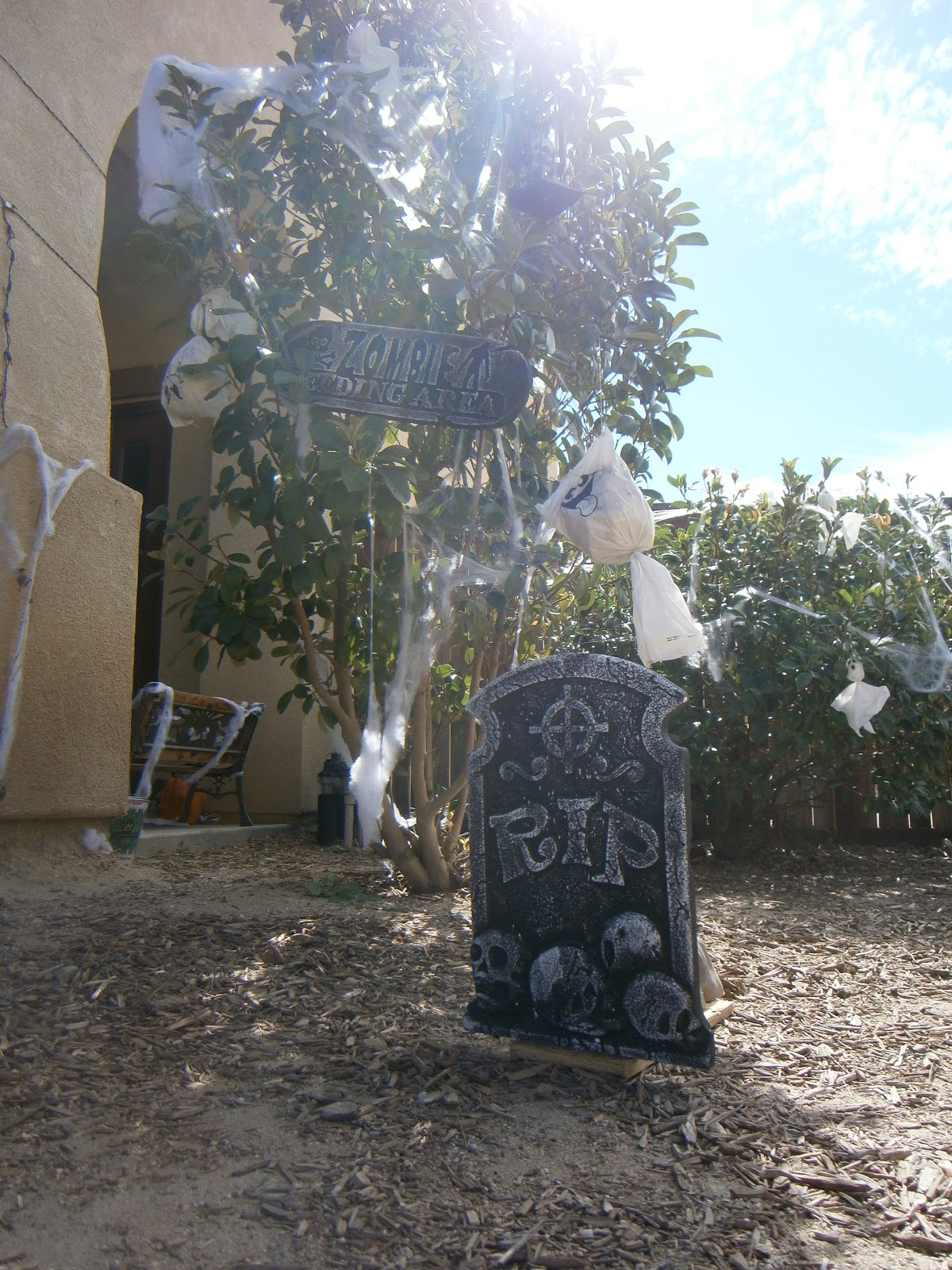
Halloween Decorations


T is perfect timing for upcoming Samhain or as my kids know it, Halloween.

Up until now, October 31st has been, for our children, a day filled with transforming yourself (oh, another T!) into someone or something else and collecting as much candy as possible. They have no realization of the traditions our American version of Halloween was derived from.

The American version of Halloween is a combination of traditions from Great Britain, Ireland, and Scotland. "Souling" was a common practice on Hallowmas in Great Britain and Ireland where children would go door to door, saying prayers and singing songs for the dead in exchange for food. Later, Scotland developed their own version in which children went "guising" and disguised themselves, going door-to-door with carved turnips for cakes, fruit, or money. Since pumpkins are more abundant in America, that tradition was also taken but modified to make our Jack-o-Lanterns. Houses are decorated in spooky ways to encourage a fright on Halloween night. We have had our Halloween decorations up since the last weekend of September. We get really excited about this holiday.

Since we live in Southern California, we also see a lot of Mexican influence in the holiday.  El Día de los Muertos is November 1st. This is the Spanish holiday of honoring the dead. Traditionally, toys are bought for children who have passed and alcohol is bought for adults who have died. These offerings are left on altars which are erected throughout the cities. Calaveras, or skulls, are seen everywhere as this is the traditional symbol for the day. Little sugar-candy skulls are given to each other as gifts.

In Wiccan tradition, this is the day that the God dies and we reflect on the cycle of life, death, and rebirth. Traditionally, food is left on the doorstep for spirits and a candle in the window to help guide them. The veil between worlds is also the thinnest on this night. This belief, which is not just a Wiccan theme is usually what prompts the stereotypical teenager to hold a "creepy" séance or bust out the Ouija board.

Halloween in France was relatively unknown until about 20 years ago. It was known as an American holiday and thus, rejected by many. As time goes on, the holiday is more widely accepted. People go to costume parties and trick-or-treating is done from store-to-store and not house-to-house. Germans hide the knives on this night so as to prevent returning spirits from harming the living.
 
Learning about traditions around the world can not only open your mind, but also give you interesting new ways to celebrate Samhain with your family. 

Sunday, September 23, 2012

Mabon Fun


Yesterday was the autumn equinox, also known as Mabon. Often pronounced MAY-bawn, it is the Lesser Sabbat which celebrates the transformation of the Goddess from Mother to Crone and the preparation of the Horned God for his death and re-birth. This is a time for reflection on the blessings that we have had throughout the year.

It was an educational day for the kids as we celebrated the second harvest and honored the changing of the seasons.


The Celebration: 


Mabon is a time of reflection for the family, and like a mini-thanksgiving; a remembrance of all of the blessings that we are grateful for. The Goddess and God bless us every day and taking time to celebrate these blessings is important.

During the ritual we cut the apples in half, revealing the five-pointed star. With each half of the apple, we called the quarters while remembering our connectedness to all life.

Potatoes, a symbol of the harvest and of fall, decorated the altar. Each of us held a potato and took turns thanking the Lord and Lady for the blessings that we have. At first my son Hermes couldn't think of any blessings, so we suggested some things like love of his family and food to fill his belly. He liked those and then surprised us by thinking of a few good ones of his own (toys, of course being one).

5-Pointed Star in Apple

My favorite part of this ritual was giving each child a piece of apple and wishing, "May you never hunger," and then a sip of blackberry juice wishing, "May you never thirst." Thinking about their future and the happiness that you wish for them was an overwhelming feeling in my heart.

After these blessings we joined our hands in a circle and did a vine dance. The vine dance was a little hard for Hermes, since he is only 4, but he thought it was a lot of fun. Going around and around, weaving our feet back and forth, we created an imaginary vine on the ground while raising our energy. We grounded our energies again and bid farewell to the quarters and the Goddess and God.

Afterward, we shared the rest of the apples and juice.

Activities for Mabon:

  • Harvest themed coloring sheets
  • Apple star stamp painting
  • Harvest vegetables or spend some time in the garden. (If you have a garden)
  • Plant vegetables such as lettuce, cabbage, radishes (or other veggies that grow in your zone). 
  • Make corn dollies
  • Make a dinner with your children that includes squash, potatoes, corn bread, and other fall fare. 
  • Find a location to go berry or apple picking (if you, like us, aren't lucky enough to have some at your home).
  • Collect leaves, seedpods, or other plant materials which have fallen and create rubbings or glue them to paper.


Next Sabbat: Samhain (October 31st)